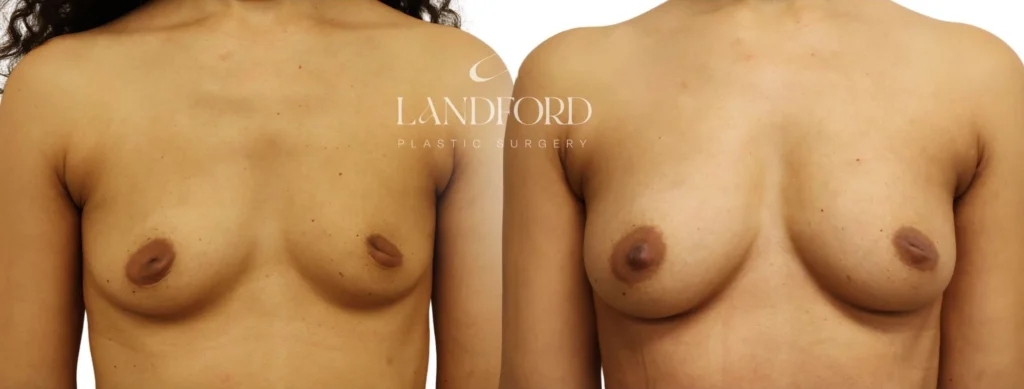

Fat Transfer Breast Augmentation

In Washington D.C. &. Maryland

At Landford Plastic Surgery in Washington, D.C., and Maryland, we offer fat transfer breast augmentation for women who want fuller, more natural-looking breasts without implants. This advanced procedure uses your own fat to enhance breast volume, offering a subtle lift with the added benefit of body contouring.

Jump to:
  1. Introduction
  2. Candidates
  3. Preparation
  4. Technique
  5. Recovery
  6. Cost

What is a Fat Transfer Breast Augmentation?

Fat transfer breast augmentation, also known as natural breast augmentation, is a procedure that utilizes liposuction to harvest fat from areas such as the abdomen, flanks, or thighs. This fat is then purified and injected into the breasts to enhance shape, volume, and symmetry.

Unlike traditional breast implants, this technique uses your body’s own tissue, minimizing the risk of allergic reactions or implant-related complications. It’s an excellent choice for patients who want modest enhancement and contour improvement in more than one area of the body.

Our patients should also note that not all of the transferred fat will survive, which means their results may settle over time. Therefore, depending on your goals, you may need additional sessions of fat grafting to achieve your desired cup size.

Whether you’re seeking to restore volume after pregnancy or weight loss, or you simply want a more proportional figure, our team is here to help you reach your aesthetic goals with safe and effective care. Fat grafting provides a gentle, implant-free alternative, yielding beautiful, natural-looking results.

Who is a Good Candidate for a Fat Transfer Breast Augmentation?

Ideal candidates for fat transfer breast augmentation in Washington, D.C., and Maryland are women who want subtle enhancement with a more natural feel and appearance.

You may be a good candidate if you:

  • Desire a modest increase in breast size (typically 1 cup size or less)
  • Have sufficient fat available for harvesting
  • Prefer a natural option over breast implants
  • Are in overall good health and at a stable weight
  • Do not smoke or are willing to stop before and after surgery
  • Have realistic expectations for your results

This procedure is not ideal for patients seeking a dramatic volume increase.

How Much Does a Fat Transfer Breast Augmentation Cost in Washington, D.C. and Maryland?

The cost of Fat Transfer Breast Augmentation in Washington D.C. and Maryland can vary depending on several factors, including the amount of fat transfer required, the number of areas treated with liposuction, and anesthesia fees.

At Landford Plastic Surgery, we provide full transparency during your consultation and offer guidance on financing options if needed. Because this is a highly customized procedure, the best way to receive an accurate quote is to schedule an in-person evaluation.

What Should I Expect During a Consultation for a Fat Transfer Breast Augmentation?

For those interested in this procedure, the first step is to schedule a private consultation at Landford Plastic Surgery. During this meeting, Dr. Wilmina Landford will discuss your goals, evaluate your anatomy, and determine if fat transfer breast augmentation is the best approach for your needs.

We’ll also review your medical history, assess your available donor sites, and create a customized surgical plan. If you’re a good candidate, we’ll walk you through pre-operative instructions and help you schedule your procedure.

How Do I Prepare for a Fat Transfer Breast Augmentation?

We want you to have a pleasant experience that produces optimal results, so you should follow these tips before receiving your fat transfer breast augmentation:

  • Maintain a Stable Weight: Because this procedure uses your own fat, it’s important to be at or near your ideal, stable weight prior to surgery. Significant weight fluctuations can affect both the fat harvesting process and your final results.
  • Nourish Your Body: Following an alkaline diet and incorporating healthy fats into your meals may improve fat survival after surgery. Patients who maintain good nutrition often see more consistent results.
  • Stop Smoking: Nicotine reduces blood flow and can interfere with healing and fat survival. You must stop smoking (including vaping and nicotine products) at least 4 weeks before and after surgery.
  • Avoid Certain Medications and Supplements: Discontinue blood-thinning medications, such as aspirin, ibuprofen, and certain herbal supplements, as they can increase the risk of bleeding. Dr. Landford will provide a full list of what to avoid and when to stop them.
  • Arrange for Support: Plan for someone to drive you home after surgery and assist you for the first 24–48 hours. You’ll need time to rest and recover, especially in the first few days.
  • Prepare Your Recovery Space: Set up a comfortable area at home where you can rest. Have loose clothing, healthy meals, water, and any prescribed medications ready before the day of surgery.
  • Wear Recommended Garments: You will be provided with a compression garment for the areas treated with liposuction. Be sure to wear it as directed to help reduce swelling and support healing.
  • Follow All Pre-Operative Instructions: You’ll receive detailed instructions specific to your surgical plan during your consultation. This may include guidance on fasting before anesthesia, skincare routines, and what to bring on the day of surgery.

Fat Transfer Breast Augmentation Risks & Safety

As with any surgical procedure, risks include:

  • Bruising
  • Swelling
  • Infection
  • Uneven results

There is also a possibility that some transferred fat will not survive, requiring touch-ups. Choosing a board-certified surgeon like Dr. Landford reduces these risks significantly.

What Are the Steps of a Fat Transfer Breast Augmentation?

Fat transfer breast augmentation is performed in three main stages, all carefully designed to ensure safe, natural-looking results:

  1. Liposuction (Fat Harvesting): Dr. Landford begins by performing liposuction on one or more donor areas of your body—commonly the abdomen, flanks (love handles), thighs, or back. Small incisions are made to insert a thin cannula that gently removes fat while preserving cell viability.
  2. Fat Purification: Once collected, the fat is processed and purified using a specialized filtration system. This step removes excess fluids, oils, and damaged cells, leaving behind healthy fat cells that are ideal for transfer.
  3. Fat Injection (Augmentation): Dr. Landford strategically injects the purified fat into various layers of breast tissue using a microdroplet technique. This method promotes even distribution, improves fat survival, and helps shape the breasts with precision and symmetry.

The procedure typically takes 2 to 4 hours and is performed on an outpatient basis. No implants are used, and only small incisions are made, which significantly reduces recovery time and visible scarring.

Where Are the Incisions and Scars for a Fat Transfer Breast Augmentation?

One of the biggest advantages of fat transfer breast augmentation is the minimal scarring involved. Here’s what you can expect:

  • Liposuction Incisions: Tiny incisions (2–4 mm) are made in discreet areas of the donor sites, such as the natural creases of the abdomen, thighs, or flanks. These small incisions allow for cannula access and typically fade significantly over time with proper care.
  • Injection Sites: No large incisions are needed for the breast augmentation itself. The purified fat is injected using fine cannulas through small puncture sites that do not require stitches. These micro-incisions usually leave no visible scars.

Because the technique is minimally invasive and uses your own tissue, it offers a more natural enhancement with minimal long-term scarring. Dr. Landford is careful to place all incisions with aesthetics and discretion in mind.

Woman in olive green bikini looking outside
tummytuck-recovery

Fat Transfer Breast Augmentation Recovery

Recovery from fat transfer breast augmentation is generally smooth and less intense than implant surgery. Most patients experience swelling, bruising, and tenderness in both the donor and breast areas.

You’ll be provided with a compression garment to wear over the liposuction areas and detailed aftercare instructions to ensure optimal fat retention. Most women return to light activity within a few days and resume full activity within 3 to 4 weeks.

It’s important to avoid pressure on the breasts and maintain a healthy lifestyle during the healing process to support long-lasting results. Following a nutrient-rich diet with healthy fats can also help maximize the survival of the transferred fat.

Please keep in mind that while this treatment is a great way to improve your breast size and reduce the appearance of unwanted fat and improve your body’s contour, there will always be some fat that is left behind. Patients looking for more dramatic changes may require an additional liposuction procedure to achieve their desired appearance.

Why Choose Dr. Landford?

Dr. Wilmina Landford is a skilled and compassionate board-certified plastic surgeon known for delivering natural-looking results through advanced surgical techniques. At Landford Plastic Surgery, we prioritize patient safety, education, and aesthetic excellence.

With her artistic eye and meticulous approach, Dr. Landford helps each patient feel seen, understood, and empowered throughout their journey. Our Washington D.C. and Maryland patients trust us for personalized care in a supportive and welcoming environment.

Schedule Your Consultation

If you’re considering fat transfer breast augmentation in Washington, D.C, or Maryland, we invite you to schedule your consultation with Landford Plastic Surgery today. During your visit, we’ll answer all your questions, evaluate your goals, and create a plan that reflects your ideal outcome.

Use our online form or call our office directly to take the next step toward a more confident you.

Fat Transfer Breast Augmentation FAQs

Patient Testimonials

A Transformative Journey of Empowerment

Schedule A Consultation

Schedule Now