Rhinoplasty

Northern Virginia

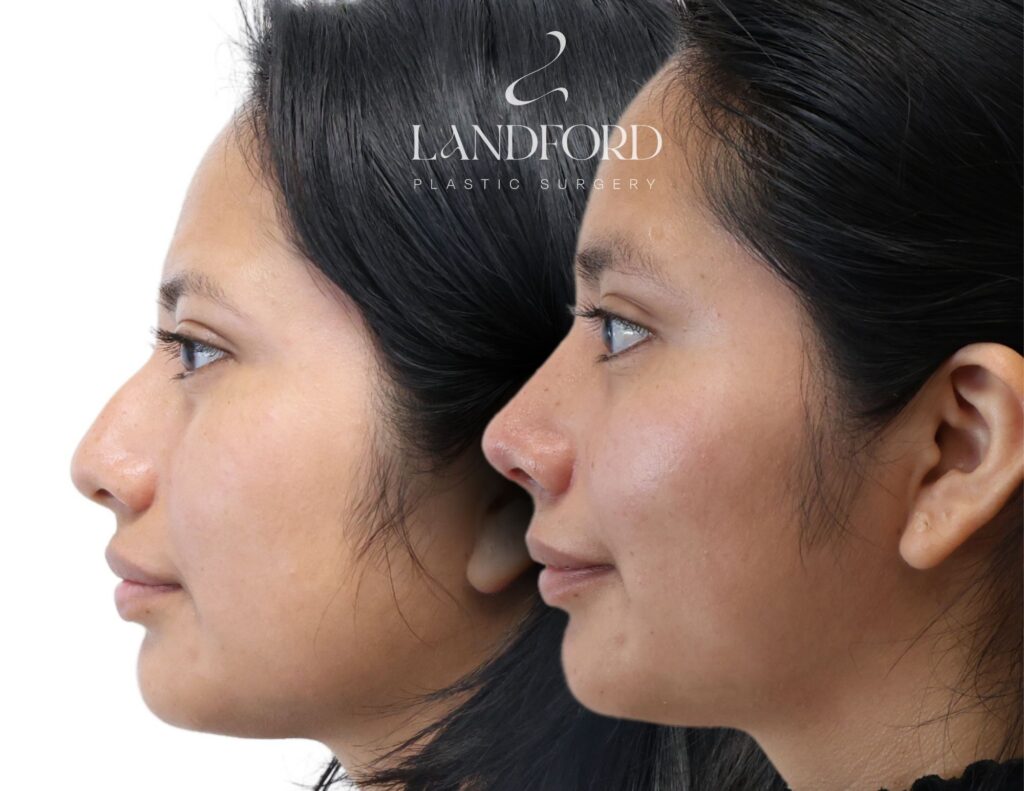
Unveil a new level of confidence as Dr. Wilmina Landford combines surgical precision with an artistic touch to sculpt the nose of your aesthetic dreams that harmonizes with your facial features and proportions. Rhinoplasty is a cosmetic surgery procedure designed to enhance facial harmony and boost self-confidence. Whether you seek subtle refinements or more dramatic enhancements, Dr. Landford’s personalized approach ensures that your aesthetic preferences are met and you can feel empowered and confident in your nose in harmony with the rest of your face.

Jump to:
  1. Gallery
  2. Candidates
  3. Preparation
  4. Techniques
  5. Recovery
  6. Cost

What is a Rhinoplasty?

A rhinoplasty, or nose job, includes a variety of aesthetic and reconstructive techniques. Cosmetic rhinoplasty enhances the nose’s appearance to achieve a variety of aesthetic goals, including improving symmetry, shape, and size. Rhinoplasty can correct asymmetrical features and improve the proportional balance between the nose and other facial features, such as the mouth, chin, and eyes, resulting in overall facial symmetry. Nose surgery can be performed as a closed rhinoplasty or an open rhinoplasty. Either approach can be used for patients who only want minor changes, such as correcting a drooping tip or a dorsal hump. Functional rhinoplasty is used to correct issues related to breathing and airflow. This is a key difference compared to cosmetic rhinoplasty, which focuses on improving the appearance of the nose.

In rhinoplasty, the skin is elevated to reshape the nasal bones and cartilage, including the nasal bridge, a key area that can be corrected. Septal extension grafts, tip grafts, spreader grafts, alar rim grafts, and columella grafts are frequently used, with septal cartilage commonly used to support the nasal structure.

Rhinoplasty can include septoplasty, turbinate reduction, and removal of deviated bone from the inside of your nose. Rhinoplasty is often combined with other treatments, including a lip lift, cheek or chin augmentation with implants, or fat grafting. This improves the relationship between the nose and upper lip, enhancing harmony throughout the face.

Every candidate seeking rhinoplasty in Northern Virginia has unique personal, cosmetic, and functional goals, a unique facial and nasal structure, and a unique health status and history. These factors are all combined to create a one-of-a-kind rhinoplasty treatment.

What Sets Dr. Landford Apart as the Premier Rhinoplasty Practice in Washington, D.C. & Maryland?

Dr. Landford brings a unique blend of elite surgical training, artistic sensitivity, and patient-centered care that sets her rhinoplasty practice apart.

    • She earned her B.A. in Biology and Medical Anthropology with honors from Mount Holyoke College, followed by her M.D. with Scholarly Distinction from the Stony Brook University School of Medicine.
    • She then completed an integrated plastic and reconstructive surgery residency at Johns Hopkins Hospital, where she served as Chief Resident and earned the Best Clinical Research Award.
    • Dr. Landford is a Johns Hopkins-trained Plastic and Reconstructive surgeon, a distinction that demonstrates her commitment to the highest standards of training, patient safety, and quality in cosmetic and reconstructive surgery.
    • Her accolades include the 2023 Aesthetic Surgery Education & Research Foundation Scholarship, the 2021 “Leading Women” Award by The Daily Record, membership in Alpha Omega Alpha (AOA), and Gold Humanism Honor Society (GHHS).
    • Dr. Landford is multilingual — fluent in English, Spanish, and Mandarin — enabling her to provide personalized care to a diverse patient base.
    • Her experience spans both aesthetic rhinoplasty and complex reconstructive work (including trauma and revision cases), giving her the surgical depth necessary to handle even challenging noses with confidence.
    • At her practice serving the DC & Maryland region, she emphasizes not only nasal shape and harmony but also airway and functional outcomes.

Who is a Good Candidate for a Rhinoplasty?

As a popular practice for facial plastic surgery in both DC and Maryland, Dr. Landford has helped patients achieve a more balanced and pleasing facial appearance. Many of the candidates we see firsthand for Rhinoplasty surgery meet the following criteria:

  • Completed facial growth
  • Maintain realistic goals for surgery
  • Non-smoker
  • Physically healthy
  • Unsatisfied with the appearance of their nose

A Rhinoplasty procedure can be performed on both women and men and while the procedures use similar techniques, the aesthetic surgery goals are a bit different for each. Dr. Landford will consider your facial features and goals when creating your procedure plan.

Curly haired woman gently touching the side of her face

Rhinoplasty Quick Facts

    • Surgery Time: Typically 2-4 hours, depending on the complexity of the case.
    • Recovery: Initial visible recovery (bruising/swelling) is around 1-2 weeks; most patients return to work in 3-5 days; heavier activity may be delayed 4-6 weeks.
    • Results: Early contour changes are visible within 1–2 weeks, most swelling resolves over 3–6 months, while final subtle refinements and settling may continue for up to 12 months.

Who is a Good Candidate for Rhinoplasty?

Landford Plastic Surgery is a popular practice in Northern Virginia. Dr. Landford has helped her patients achieve a more balanced, aesthetically appealing facial appearance tailored to their unique goals and preferences. In general, the rhinoplasty candidates should meet the following criteria:

    • Completed facial growth
    • Maintain realistic goals for surgery
    • Non-smoker
    • Physically healthy
    • Unsatisfied with the appearance of their nose

    Rhinoplasty can be performed on individuals of any gender. While the procedures use similar techniques, the aesthetic surgery goals are a bit different for male and female patients. Dr. Landford is equipped with the education, training, and skills to provide natural-looking results for anyone. She will examine your facial features and goals during your consultation and when creating your treatment plan.

How Much Does Rhinoplasty Cost in Northern VA?

The cost of rhinoplasty in Northern Virginia varies by patient. Factors including the technique, complexity of the reconstruction, and the time required for surgery all contribute to the cost. Your quote is an estimate and will be discussed in detail during your consultation. The best way to determine the cost of your surgery is to meet with Dr. Landford for a rhinoplasty consultation and make a list of your surgical goals. These goals will be compared with the procedure’s expectations and limitations.

From there, Dr. Landford can explain the necessary steps to achieve your goals and create a personalized treatment plan. Finally, our Patient Coordinator can provide you with a complete breakdown of the cost of the procedures.

What Should I Expect During a Consultation for Rhinoplasty?

The first step toward your rhinoplasty in Northern VA is to contact our office to schedule your initial consultation with Dr. Landford. She will listen to your cosmetic goals and answer any questions that come up. We encourage you to be completely honest in your explanation so that Dr. Landford can provide you with the most accurate information and recommendations.

Dr. Landford will examine your nose and facial structure to determine the most suitable approach for your initial rhinoplasty or, if necessary, revision rhinoplasty to correct a prior procedure.

Dr. Landford will ask about your medical and plastic surgery history and gather the information to make an informed decision. Once all details are considered, she will create a personalized procedure plan using 3D imaging technology. Once the plan is approved, our Patient Care Coordinator will help you schedule a surgical appointment.

How Do I Prepare for a Rhinoplasty Procedure?

Dr. Landford will provide you with instructions tailored to your rhinoplasty in Northern Virginia. Here are some basic tips to ensure your rhinoplasty goes smoothly.

    • Fill your prescriptions beforehand
    • Stay hydrated
    • Get plenty of rest
    • Keep your face clean
    • Request the appropriate number of days off work in advance and have a relative or family member ready to take you home and possibly help you recover for the first few days after your surgery.
    • Prep your meals to make cooking less difficult

Rhinoplasty Risks & Safety

Surgical procedures all carry potential risks or side effects, and nose surgery is no exception. Some of these risks include:

    • Anesthesia risks
    • Change in skin sensation (numbness or pain)
    • Difficulty breathing
    • Infection
    • Nasal septal perforation (a hole in the nasal septum) is rare. Additional surgical treatment may be necessary to repair the septum.
    • Poor wound healing or scarring
    • Possibility of a revisional rhinoplasty
    • Skin discoloration and swelling

    If you do have any long-lasting or concerning reactions during your recovery, please contact us immediately.

What Are the Steps of Rhinoplasty Surgery?

On the day of your cosmetic nose surgery, you will review your treatment plan with Dr. Landford in the pre-operative area. This is an opportunity to clarify your goals and address any questions. In the operating room, you will be given general anesthesia to ensure you are completely comfortable throughout the procedure. Dr. Landford will begin your nasal surgery using advanced plastic surgery techniques to achieve the look you desire.

For a closed rhinoplasty, the incisions will be hidden inside your nose. An open procedure requires an incision across the narrow strip of tissue that separates your nostrils, which is called the columella. During the open procedure, the skin covering your nasal bones and cartilage will be gently lifted, allowing access to reshape the structure of your nose. This includes correcting the nose bridge for both aesthetic and functional improvements.

For our patients with overly large noses, Dr. Landford will reduce the size by removing bone and cartilage or by adding cartilage grafts. Dr. Landford may also use a nose-narrowing technique, such as osteotomies to narrow the nasal bones, to achieve a more refined appearance. If this is required, cartilage from the septum (the partition in the middle of your nose) may be used. If there is not enough cartilage within the septum (due to previous surgery or trauma), Dr. Landford may use ear cartilage (without altering the ear’s appearance) or rib cartilage (often from a tissue bank). A deviated septum can be straightened to improve your breathing ability.

If it’s necessary to reduce the nostrils or alar bases, Dr. Landford may get rid of excess skin and tissue around the nostrils. This will contour and narrow the alar bases for cosmetic enhancement.

After the underlying structure of your rhinoplasty has been molded to resemble your desired appearance, your nasal skin and tissue are redraped, followed by closing the incisions with fine sutures. Dr. Landford may apply nasal packing, a nose splint to stabilize the nose during healing, and bandaging to protect your new nose.

A nose job can take 2-4 hours to complete, depending on the extent of correction required.

Surgical Techniques for Rhinoplasty

Dr. Landford’s expertise qualifies her to lead a cosmetic surgery practice and perform highly specialized, advanced facial procedures. She is a rhinoplasty specialist with extensive training and experience in complex nasal surgeries, employing a variety of techniques to enhance the nose.

Open Rhinoplasty

Open rhinoplasty uses a small incision across the columella, the small strip of tissue that separates the two nostrils. Then, Dr. Landford elevates the skin to assess your bone and cartilage framework. She will have full exposure to the tissue and bone and will perform corrections as needed, such as removing excess skin and tissue around the nostrils, reshaping the cartilage and nasal bones, or placing cartilage grafts. When she has completed all of these steps, she will reposition the skin and close the areas with sutures.

This treatment will result in a well-hidden scar at the incision site. Over time, the scar will fade and be barely noticeable.

Closed Rhinoplasty

This technique is used for patients who require minimal nasal correction. Dr. Landford initiates this nose surgery by making small incisions inside each nostril. Then, she will sculpt the cartilage and nasal bones, remove excess tissue, or modify the shape and size of the nostrils. Similar to an open rhinoplasty, Dr. Landford closes the incisions with dissolvable sutures. 

Closed rhinoplasty does not leave any scarring. Not all patients qualify as candidates due to the limitations of the technique.

Revision Rhinoplasty

When performed by a skilled plastic surgeon, rhinoplasty surgery can yield remarkable results. Unfortunately, some rhinoplasty patients who receive a rhinoplasty may not achieve the desired outcomes due to poor healing or dissatisfaction with the results.

Revision rhinoplasty, also known as secondary rhinoplasty, is considered more complex because it is performed on noses that have already undergone surgery. Even subtle humps or asymmetry can fail to meet rhinoplasty patients’ expectations, causing many surgeons to struggleto achieveg the specific results their patient seeks.

Ethnic Rhinoplasty

The beauty of humanity lies in its individuality and uniqueness. This philosophy is applicable in the realm of plastic surgery, too, where not every technique is universally applicable. Dr. Landford offers variations in her rhinoplasty procedures to meet the diverse needs of rhinoplasty patients in Northern Virginia, enhancing their appearance while preserving their ethnic identity.

Ethnic rhinoplasty requires careful attention to detail to create a more aesthetically pleasing nose for patients who are not Caucasian. This specific rhinoplasty procedure is designed to minimize nasal flaws, enhance overall size, shape, and symmetry to promote facial harmony, and maintain your unique beauty and heritage.

Male Rhinoplasty

For male patients seeking to address their nasal shape or size, or those wishing to address a nasal “bump,” Dr. Landford employs a specialized approach. Male rhinoplasty preserves a strong, prominent nose with a less rotated nasal tip. This ensures harmony across the face and maintains the masculine facial appearance. This procedure also ensures you maintain a square, well-defined jawline while addressing subtle defects in your nose that you are unhappy with.

Dr. Landford takes into account all the unique features of a male nose during this process, such as the width of the nose, angle of the nasal tip, facial shape and structure, and the angle of the nasal bridge. As a highly trained rhinoplasty surgeon in the Northern Virginia area, Dr. Landford considers every aspect of what makes a male nose distinctive. Regardless of your genetic makeup, you are in the reliable hands of Dr. Landford.

Non-Surgical Rhinoplasty

Though rhinoplasty is most commonly a surgical procedure, there are non-surgical techniques that can alter the size, shape, and appearance of your nose. This minimally invasive alternative, also known as liquid rhinoplasty, is highly effective for patients who have minor contour deformities.

To address these concerns, Dr. Landford uses fillers similar to those used to augment cheeks or lips, dorsal depressions, or flat nasal tips. This process smoothes the contour and enhances tip projection. Although the effects of fillers don’t last as long as surgery, they are a great alternative for individuals not yet ready to commit to surgery or seek a quick solution for upcoming events such as weddings, graduations, or reunions.

Non-surgical rhinoplasty is performed at our office and usually takes around 45 minutes. If you’re considering this option for an imminent event, you should plan to get it a few hours in advance to allow the filler to settle. Dr. Landford can help you determine if this is the best treatment for your unique needs.

Transgender Rhinoplasty

Embarking on the journey to discover and express your true self involves several considerations. Rhinoplasty can play a significant role in this transition, and Dr. Landford will happily guide you through the process.

The size and shape of the nose are notable aspects of the overall masculine or feminine facial appearance, underscoring the importance of transgender rhinoplasty in both FTM and MTF transitions.

Nasal Feminization

Facial feminization rhinoplasty is particularly significant in the MTF transition. In this case, the goal is to minimize traditionally male nasal characteristics. Typically, males possess broader brow ridges and more prominent noses, resulting in a pronounced dorsal ridge, wider nostrils, and a rounded, wide nasal tip.

During a nasal feminization procedure, Dr. Landford focuses on creating a less prominent nasal profile by reducing the dorsal ridge, elevating the nasal tip, and reshaping and resizing the nostrils. Many patients combine this procedure with other feminization procedures, such as cheek implants, chin contouring, and brow ridge/forehead reshaping/repositioning for a comprehensive, natural-looking transformation.

Nasal Masculinization

During the FTM transition, Dr. Landford aims to enhance facial features to achieve a more masculine appearance. Nasal masculinization involves augmenting and, often, widening the nose to increase nasal prominence. This can be achieved through techniques such as cartilage grafts, implants, and fat transfer.

When combined with procedures such as forehead lengthening and facial contouring, our patients in Northern Virginia can optimize, enhance, and accentuate their features, achieving a more traditionally masculine facial appearance.

Septoplasty and Turbinate Reduction

For many rhinoplasty patients, breathing difficulties and chronic nasal congestion are as critical as the nose’s cosmetic appearance. Septoplasty and turbinate reduction are two surgical procedures frequently performed alongside rhinoplasty to optimize nasal function.

Septoplasty corrects a deviated septum—the cartilage and bone that divide the nasal cavity—which is a common cause of nasal obstruction and impaired airflow. This technique straightens the septum, dramatically improving or fully allowing patients experiencing breathing problems to breathe more easily.

Turbinate reduction targets the turbinates, small structures in the nasal passages that can become enlarged and block airflow. By reducing the size of the turbinates, Dr. Landford can expand the nasal passages, providing lasting relief from nasal congestion.

When combined with rhinoplasty, these two procedures not only enhance the cosmetic appearance of the nose but also dramatically improve quality of life by helping patients breathe more easily and comfortably.
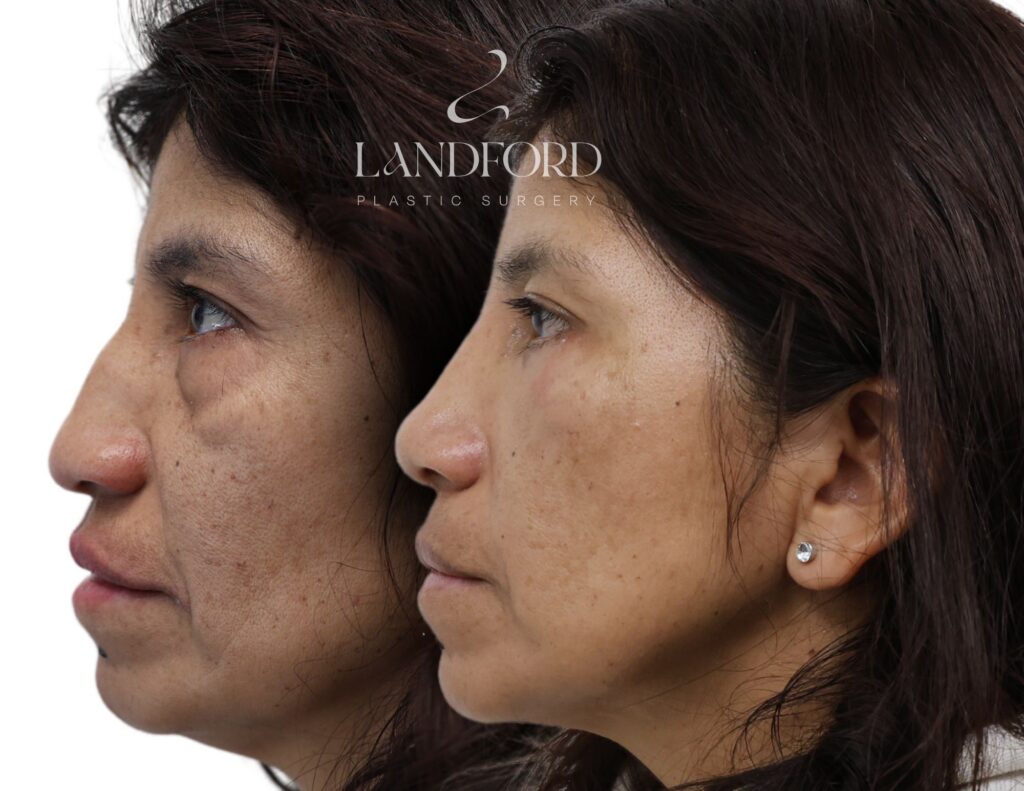
Where Are the Incisions and Scars for Rhinoplasty?

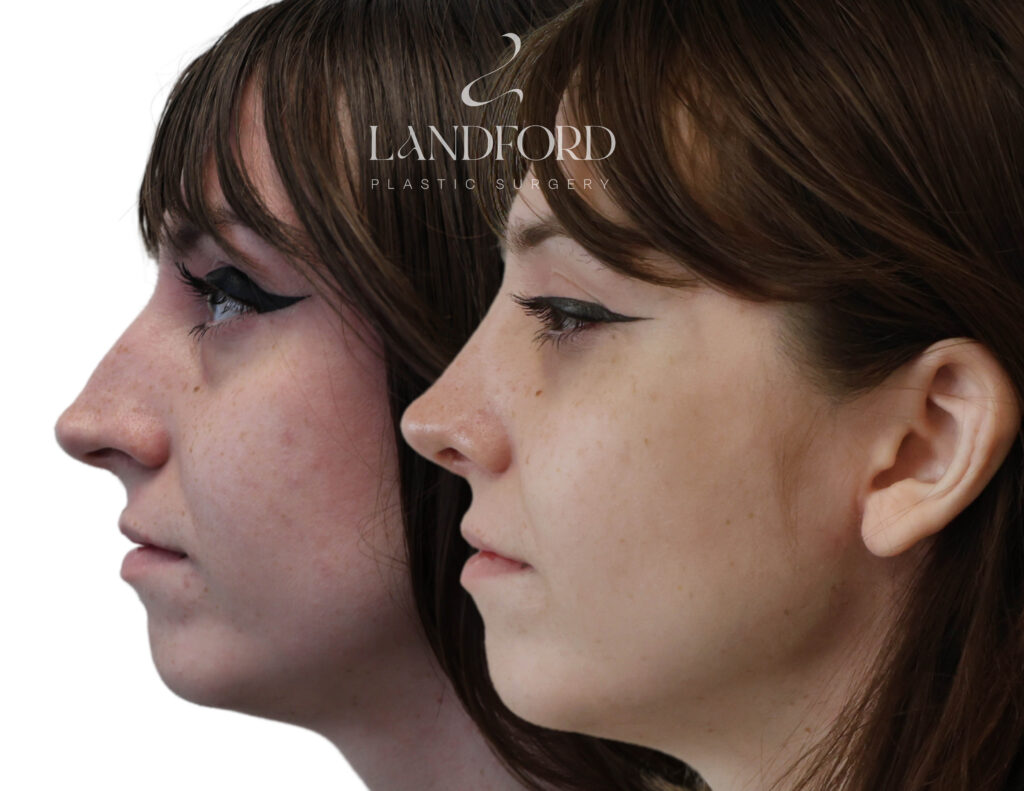
During a rhinoplasty, Dr. Landford strives to make any incisions as inconspicuous as possible, often placing them around the base of the nostrils. Depending on the specific needs of the patients and treatment, incisions may be made within the nostrils to hide any visible scarring.

Every plastic surgery procedure will include scarring in some capacity, whether it’s minimal or more noticeable. Nevertheless, it’s very important to acknowledge that any remaining scar tissue typically fades over time.

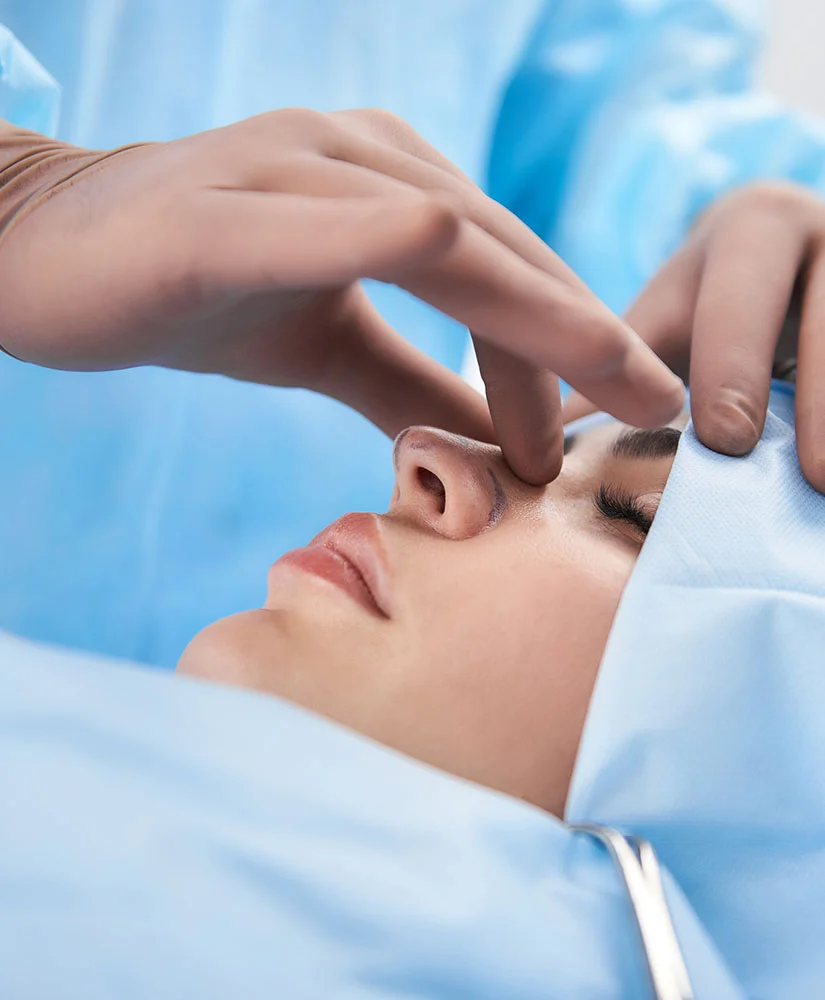
Woman receiving rhinoplasty surgery
tummytuck-recovery

Rhinoplasty Recovery

Cosmetic rhinoplasty patients can comfortably rest and recover at home in the Northern Virginia area the same day they undergo nasal surgery. The recovery period typically lasts 1-2 weeks and involves some bruising and swelling, particularly around the eyes and cheeks. You’ll likely experience some discomfort and stuffiness during the first week, which can be managed with pain medication and nasal sprays provided by Dr. Landford.

Nasal bone stability typically improves after about 6 weeks. This allows patients to gradually resume more strenuous activities, blow their noses, and wear glasses instead of contacts. You might experience temporarily nasal congestion from swelling, but this will gradually go away as the nose heals.

Visible swelling typically fades within 5 to 7 days, but some residual swelling may continue for 12 to 18 months. Rhinoplasty results become more apparent as swelling subsides and the nose settles into its final shape. The timeline for visible improvements can vary widely for each patient, as the extent of the procedure also varies.

You may gradually return to normal activities over the first 3 weeks following your surgery, with unrestricted activities resuming after 8 weeks when nasal bones and cartilage have fully knitted together. During this time, you will notice an improvement in nasal and facial contours, accompanied by improved breathing. It can take up to a year for the final results of your new nose to become noticeable, as minor residual swelling improves, and the skin envelope continues to contract.

You will need to attend a few follow-up appointments with Dr. Landford, with the first one typically 5-7 days after your surgery. During this first follow-up, your sutures and splints will be removed, and Dr. Landford will check your initial progress. Patients usually feel well enough to return to work within a few days to a week. Wait to return to more demanding activities, exercise, and contact sports until 4-6 weeks after your primary rhinoplasty.

Why Choose Us?

Wilmina Landford, MD, is a Johns Hopkins-trained plastic and reconstructive surgeon whose meticulous attention to detail complements her keen eye for design. Her exceptional technical skill, combined with her compassionate and attentive nature, ensures that each patient achieves a gorgeous, natural-looking transformation.  Dr. Landford seamlessly blends expertise and artistry in her dedication to enhancing confidence in her patients’ nasal and overall facial appearance. Dr. Landford is fluent in English, Spanish, and Mandarin, allowing her to communicate with an even broader range of patients in Northern VA and beyond.

Schedule a Consultation

Rhinoplasty offers a wide variety of benefits, including enhancing nasal aesthetics and correcting a deviated septum to improve breathing. If you’re in Northern Virginia and interested in this cosmetic procedure, don’t hesitate to reach out to our office. Schedule your rhinoplasty consultation with Dr. Landford by contacting us or by conveniently filling out an appointment form on our website. We can’t wait to meet you!

Rhinoplasty FAQs

Patient Testimonials

A Transformative Journey of Empowerment

Schedule A Consultation

Schedule Now