- Face
- Body
- Breast
- For Men
- Non Surgical
- Wrinkle Relaxers
- Dermal Fillers
- Lip Fillers
- Microneedling
- Morpheus8
- PRP
- Cellulite Reduction
- Hand Rejuvenation
- Laser Skin Resurfacing
- Lymphatic Drainage Massage
- Non-Surgical Rhinoplasty
- Non-Surgical Butt Lift
- Ozempic Face Treatments
- Sculptra
- Facial Balancing
- Hyperpigmentation Treatment
- Vaginal Rejuvenation
- FaceTite
- Exosomes
- Awake Treatments
- Meet Dr. Landford
- Patient Resources
- Recovery Guide
- Gallery
- Cirugía Plástica
- Location
- Contact Us
What Is an Ethnic Facelift?
An ethnic facelift addresses familiar signs of facial aging, including sagging skin, jowling, and loss of definition, while taking the patient’s individual anatomy, skin characteristics, and aesthetic identity into account.
There is no single facial structure or pattern of aging shared by every patient of a particular background. Differences in facial proportions, soft tissue, skin thickness, pigmentation, and scarring tendencies can all influence surgical planning. Dr. Wilmina Landford considers these factors alongside the features you want to preserve and the changes you would like to see.
An ethnic facelift is not a separate type of facelift so much as an individualized approach to performing one. The technique should fit the person rather than asking the person to fit a predetermined aesthetic.
Who is a Good Candidate for an Ethnic Facelift?
An ethnic facelift may be appropriate for women and men who want to address visible signs of facial aging while preserving the features that are important to their appearance and identity.
Good candidates often include:
- Individuals bothered by jowling or loss of jawline definition
- Those with loose or sagging skin through the lower face or neck
- Patients who have noticed changes in facial shape as they have aged
- Want to look refreshed while still looking like yourself
- Have a clear understanding of what a facelift can and cannot change
- Are in good overall health and do not smoke
For patients of color, surgical planning may also need to account for individual skin characteristics, facial anatomy, and any history of pigmentation or noticeable scarring. During your consultation, Dr. Landford will evaluate these factors and determine which approach is most appropriate for you.

How Much Does an Ethnic Facelift Cost in Washington DC & Baltimore?
The cost of an ethnic facelift in Washington, D.C., Baltimore, and surrounding Maryland communities will vary from patient to patient. The extent of your facelift and whether you combine it with another procedure will both affect the total cost. After Dr. Landford has evaluated you and discussed what you would like to address, the practice can provide pricing for your specific surgical plan.
Landford Plastic Surgery believes in transparency throughout the process, and a detailed quote will be provided before surgery is scheduled.
What Should I Expect During a Consultation for an Ethnic Facelift?
A private consultation at Landford Plastic Surgery is where the process begins. Dr. Landford assesses your anatomy, listens to your concerns, and builds a surgical plan tailored to your skin, structure, and goals. The consultation gives you a clearer idea of the procedure, recovery, and the results that may be realistic for you. Pre-surgical instructions are provided ahead of your procedure date.
How Do I Prepare for an Ethnic Facelift?
Preparing for your facelift begins with following the instructions Dr. Landford provides for your specific surgical plan. You may need medical testing before surgery and may be asked to adjust certain medications or supplements. Smoking and nicotine use should also be stopped as directed, since they can interfere with blood flow and healing.
Plan for the practical side of recovery as well. Arrange for someone to drive you home after surgery and stay with you during the early recovery period. Fill any prescriptions ahead of time and have meals, comfortable clothing, and other essentials ready at home.
Dr. Landford will also discuss skincare and incision care with you, including any precautions that may be particularly important for your skin.
Ethnic Facelift Risks & Safety
As with any facelift, there are potential risks associated with surgery. Dr. Landford will discuss these with you during your consultation so you understand how they may apply to your individual surgical plan.
Potential risks include:
- Bleeding or a collection of blood beneath the skin (hematoma)
- Infection
- Noticeable or unfavorable scarring
- Numbness or other changes in sensation
- Injury to the facial nerves, which may be temporary or permanent
- Differences in symmetry
- Hair loss near an incision
- Problems with wound healing
- Skin discoloration or pigmentation changes
- Complications related to anesthesia
- The possibility of additional surgery
Your own history of healing matters as well. If you have experienced raised or keloid scars, hyperpigmentation after an injury or procedure, or other concerns with wound healing, let Dr. Landford know during your consultation. She can take these factors into account when planning your incisions and postoperative care.
What Are the Steps of an Ethnic Facelift Surgery?
Your facelift will be tailored to your anatomy and the specific changes Dr. Landford is addressing. After anesthesia is administered, she places the incisions in carefully selected locations, typically around the ear and hairline, where they can follow the natural contours of the face.
Through these incisions, Dr. Landford can reposition and support the deeper facial tissues rather than relying on skin tightening alone. The skin is then redraped over the newly positioned contours, excess skin is removed as needed, and the incisions are carefully closed.
Once surgery is complete, you will be monitored as you wake from anesthesia and prepare to go home with your caregiver. Before you leave, you will receive instructions for the first few days at home, including how to care for your incisions and what to expect as swelling and bruising develop.
Surgical Techniques for an Ethnic Facelift
There is no single technique used for every ethnic facelift. Dr. Landford selects and adapts her approach based on your facial anatomy, degree of aging, skin characteristics, and the areas you would like to address.
Dr. Landford offers several facelift techniques, and the approach she recommends will depend on your facial anatomy, the areas showing signs of aging, and the degree of correction you need. For an ethnic facelift, these same established techniques are adapted to the individual rather than using a different procedure based on ethnicity alone.
Which of these techniques makes sense for you will depend on what Dr. Landford sees during your examination and what you hope to change. Your existing facial structure remains the starting point. The technique is chosen to address aging in a way that works with your features rather than reshaping them toward a single ideal.
Deep Plane Facelift
With a deep plane facelift, Dr. Landford works beneath the more superficial layers of the face to release and reposition tissues that have descended with age. This gives her access to the midface and lower face, where she can address changes such as jowling, deeper nasolabial folds, and loss of definition along the jawline. The lift comes from repositioning these deeper tissues rather than pulling the skin tight.
Mini Facelift
Not everyone who notices early jowling or a softer jawline needs an extensive facelift. A mini facelift uses shorter incisions around the ears and focuses on more limited changes through the lower face. Dr. Landford may recommend this approach when the amount of skin and tissue laxity does not call for a more extensive operation.
Mid-Facelift
A mid-facelift shifts the attention higher on the face, concentrating on the cheek area rather than primarily the jawline. By repositioning cheek tissues that have descended over time, Dr. Landford can restore some of the fullness and contour that has been lost through the central face.
Awake Facelift
An awake facelift is performed using local anesthesia, with oral sedation when appropriate, rather than general anesthesia. This option allows Dr. Landford to perform facial rejuvenation while the patient remains awake and comfortable and may be considered for patients whose surgical plan is suitable for this approach.
Where Are the Incisions and Scars for an Ethnic Facelift?
Facelift incisions are typically placed around the ears and may extend into the hairline, depending on the technique being performed and the areas Dr. Landford needs to address. She plans their placement carefully so the resulting scars can follow natural creases and contours whenever possible.
Scars are more noticeable early in recovery and generally become less prominent as they mature. How a scar ultimately heals varies from person to person, which makes your own history especially useful when planning surgery.
If you have previously developed raised or keloid scars, noticeable hyperpigmentation, or other changes after an incision or injury, Dr. Landford will want to know. She can consider how your skin has healed in the past when planning incision placement and your postoperative scar care.

Ethnic Facelift Recovery
Your face will look and feel different during the first several days after surgery. Swelling and bruising are normal, and you may notice tightness or areas of temporary numbness as well. Dr. Landford will explain how to care for your incisions, what you can do for discomfort, and which changes are expected as you begin to heal.
Most patients need about one to two weeks away from work and social activities, although everyone heals at a different pace. You will begin with light activity and gradually return to exercise and other normal routines as Dr. Landford clears you to do so.
Your face will continue to change well beyond those first few weeks. Residual swelling settles gradually, the tissues soften, and incision lines continue to mature over the following months. Sun protection is particularly important while scars are healing, especially if your skin is prone to developing noticeable pigmentation after inflammation or injury.
Why Choose Us?
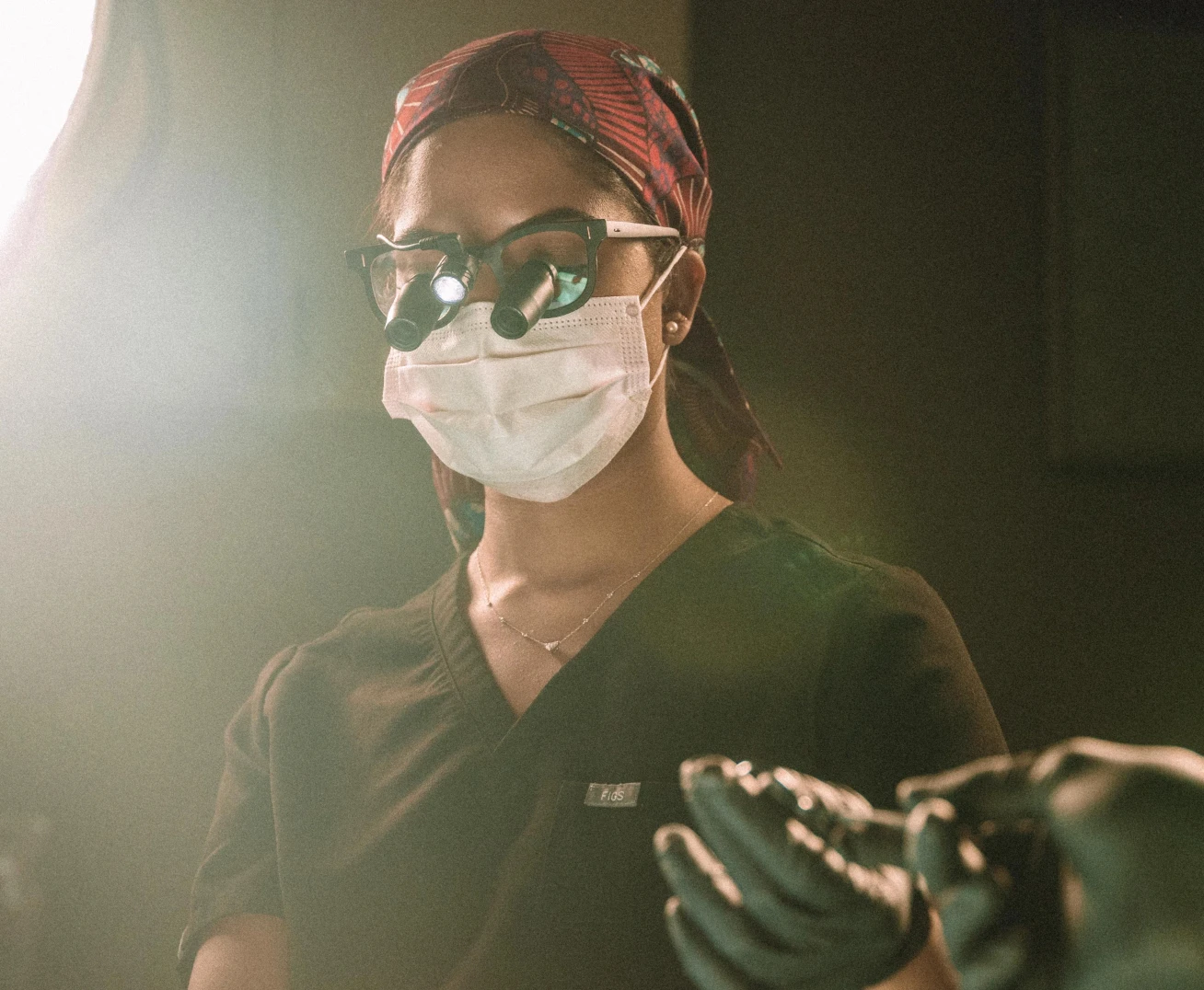
Dr. Wilmina Landford is a board-certified plastic and reconstructive surgeon whose training and perspective bring particular relevance to ethnic facial rejuvenation. She graduated with honors from Mount Holyoke College, earned her medical degree with scholarly distinction from Stony Brook University School of Medicine, and completed her integrated plastic surgery residency at Johns Hopkins Hospital, where she served as Chief Resident and received the Johns Hopkins Best Clinical Research Award.
Her perspective on representation in plastic surgery also shows up in her academic work. Dr. Landford has published peer-reviewed research on diversity and equity within the field. It is an area she understands both as a surgeon and through her own experience in medicine.
As a Black and Latina plastic surgeon, Dr. Landford understands that facial rejuvenation is not about moving every patient toward the same definition of beauty. She takes the time to learn which features matter to you, what you would like to change, and what you want to preserve. For patients considering an ethnic facelift in Washington, D.C., and Baltimore, that understanding becomes part of the surgical planning from the very beginning.
Schedule a Consultation
Dr. Landford welcomes patients from across Washington, D.C., Baltimore, and the surrounding region. If you are considering an ethnic facelift, a personal consultation gives you the opportunity to discuss the changes you have noticed, the features you want to preserve, and what you hope to achieve through surgery.
Dr. Landford will evaluate your facial anatomy, answer your questions, and explain the approach she believes is best suited to you. You will also have the opportunity to discuss recovery and what you can realistically expect from your results.
Contact Landford Plastic Surgery today to schedule your appointment.
Schedule NowEthnic Facelift FAQs
A Transformative Journey of Empowerment