Hyperpigmentation, Dark Spots, and Melasma
Dyspigmentation (uneven skin color) happens when melanocytes, the cells that make pigment, produce too much melanin in certain areas. Sun exposure, hormones, acne, and skin injury are the most common triggers. The result may be sun spots and age spots, melasma (symmetrical brown patches often triggered by hormones and heat), or post-inflammatory hyperpigmentation (PIH), the dark marks that linger after a breakout.
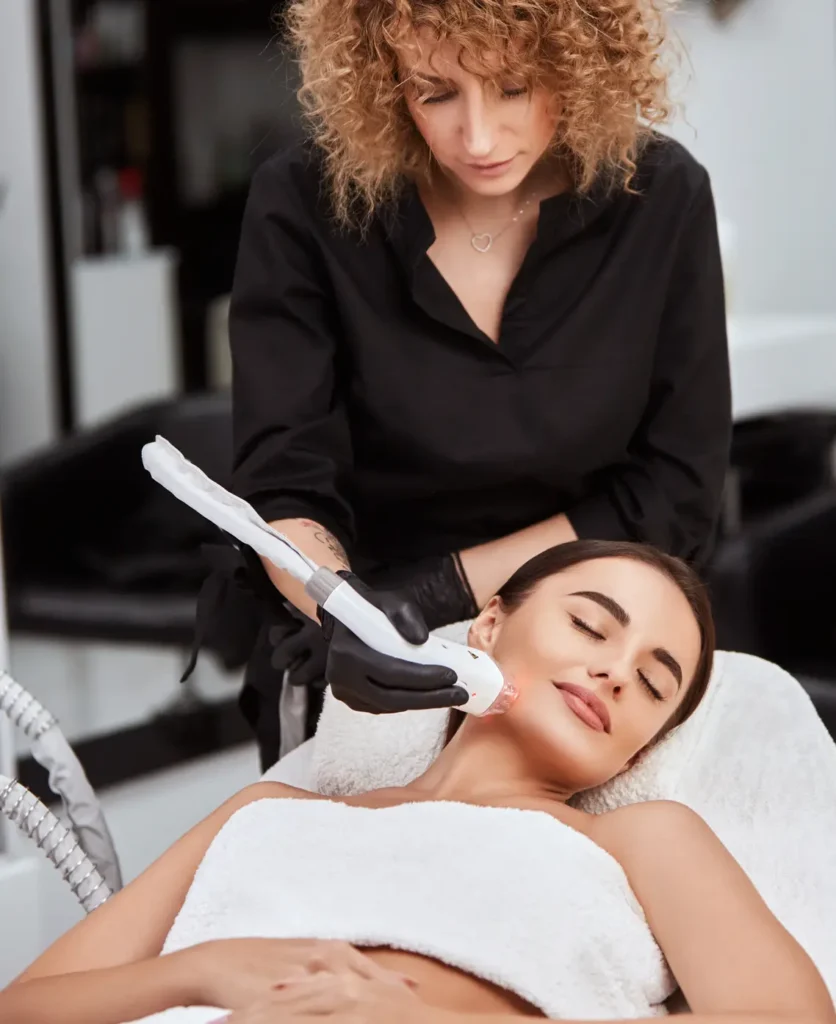
The Aerolase Nd:YAG laser breaks up excess pigment in gentle, controlled sessions without the heat that can make pigment worse. For deeper or stubborn pigmentation, we often alternate laser sessions with a VI Peel® Precision Plus peel, which exfoliates surface pigment while the laser works below it. Learn more about our hyperpigmentation treatment.
Rosacea and Persistent Redness
Rosacea is a chronic inflammatory skin condition that causes flushing, persistent redness, visible blood vessels, and sometimes acne-like bumps across the cheeks, nose, and chin. Its exact cause isn’t fully understood, but genetics, an overactive immune response, and triggers such as heat, alcohol, spicy food, and sun exposure all play a role.
Because the Nd:YAG wavelength is absorbed by hemoglobin in blood vessels, Aerolase can reduce redness and calm visible vessels while quieting inflammation. Rosacea can’t be cured, but many patients see a noticeable reduction in flushing and redness after a series of sessions, with periodic maintenance to keep flares under control.
Acne and Inflammation
Acne develops when oil, dead skin cells, and bacteria clog pores and trigger inflammation. In skin of color, each inflamed breakout can also leave behind dark marks, so treating acne and the pigment it causes at the same time matters.
The Aerolase Nd:YAG laser reduces acne-causing bacteria, calms active inflammation, and can help regulate oil production. A related Aerolase device is FDA-cleared for mild to moderate inflammatory acne, and clinical research in patients with skin of color has shown improvement in both breakouts and post-inflammatory hyperpigmentation.
Wrinkles, Texture, and Enlarged Pores
Fine lines, crepey texture, and enlarged pores develop as collagen production slows with age and sun exposure. Aerolase gently heats the deeper layers of the skin to stimulate new collagen, gradually smoothing texture and softening fine lines over a series of treatments.
For more pronounced wrinkles or laxity, we pair the laser with microneedling or Morpheus8, or recommend a stronger option such as Halo or BBL laser skin resurfacing.
Post-Surgical Scars and Early Healing
A surgical scar forms as your body lays down new collagen to close an incision. In the first weeks and months, a new scar is often red, raised, or firm, and how it heals during this window shapes how it looks long term. Some scars thicken (hypertrophic scars) or darken, especially in darker skin tones.
We use the Aerolase Nd:YAG laser to treat post-surgical scars, including in the early period of healing, once your incision has closed and your surgeon has cleared you for treatment. The laser targets the redness in a new scar and calms inflammation, which can help the scar flatten and fade more evenly. Older scars can also soften in color and texture over a series of sessions. If you have surgery with our practice, laser scar treatment can become part of your recovery plan.
Laser Hair Removal for Face and Body
The 1064-nanometer wavelength reaches the hair follicle while largely bypassing pigment at the skin’s surface, which makes Aerolase one of the safer options for laser hair removal on darker skin tones. We use it for hair removal on the face, including the upper lip, chin, and jawline, and on the body, including the underarms, legs, bikini line, back, and chest. Hair grows in cycles, so most patients need a series of sessions spaced several weeks apart for lasting hair reduction. Aerolase can also help calm the razor bumps and ingrown hairs that often come with shaving.
Vaginal Rejuvenation
Our practice also uses Aerolase for vaginal rejuvenation. Changes after childbirth, with age, or around menopause can affect comfort and confidence, and many patients prefer to start with a nonsurgical option. Treatment is performed in our office with no incisions. During your consultation, we’ll talk through your concerns and medical history and explain what laser vaginal rejuvenation can and can’t do, so you can decide whether it’s right for you.